Advances in dental materials, digital planning, and clinical techniques have made replacing missing teeth more predictable and natural-looking than ever. While dental implants and bridgework are long-standing options for restoring oral function, removable dentures continue to be a reliable solution for many patients who need to rebuild a complete smile.
At the office of Emerald Dentistry, we design and fabricate dentures with an emphasis on fit, comfort, and a lifelike appearance. Every prosthesis is created to support facial contours, restore chewing ability, and help patients speak and smile with confidence.
Our approach is patient-centered: we evaluate the whole picture — oral health, lifestyle, and treatment goals — and recommend denture solutions that balance function and aesthetics without unnecessary complexity.
Losing one or more teeth affects more than your smile. Teeth play an active role in speaking clearly, guiding the bite, and preserving the shape of the jawbone and soft tissues that frame the face. When teeth are missing, neighboring teeth can tilt or drift, which alters bite relationships and makes the mouth harder to clean.
Over time, the absence of tooth roots allows the jawbone beneath to gradually remodel and shrink. This bone loss can change facial support, resulting in a collapsed or sunken appearance and making future restorative options more complex. Replacing teeth in a timely way helps protect oral function and the underlying structures that maintain a balanced facial profile.
The effect of missing teeth also extends to nutrition and quality of life. Difficulty chewing can lead people to avoid certain foods, which may reduce variety and lower dietary intake of important nutrients. By restoring chewing efficiency, dentures can help people enjoy a broader, healthier diet and engage socially without worrying about gaps or slipping teeth.

Dentures are removable prosthetic devices made of artificial teeth set into a supportive base that rests on the gums. The base is crafted to follow the shape of the tissues it contacts so the denture distributes biting forces comfortably and stays stable during speech and eating.
Removability is a key advantage: patients can clean the prosthesis and the mouth thoroughly, inspect remaining teeth, and give soft tissues a nightly rest. This access helps maintain oral hygiene and allows clinicians to monitor tissue health over time.
Modern denture teeth are available in a range of shades, shapes, and materials that mimic natural enamel. When combined with careful selection of tooth position and a well-shaped base, a denture can achieve pleasing aesthetics while supporting proper lip and cheek posture for a natural facial appearance.
Selecting the appropriate denture type depends on how many natural teeth remain, the health of those teeth, the quality of supporting tissues, and the patient’s functional expectations. A thorough clinical exam and diagnostic imaging guide this decision so the final prosthesis meets each person’s specific needs.
We commonly consider two broad categories: full (complete) dentures for patients who are missing all teeth on an arch, and partial dentures for those who still retain some stable natural teeth. Each category includes several variations designed to improve comfort, retention, and long-term success.
When natural teeth remain and have good periodontal support, a partial denture can restore form and function while helping to preserve tooth position and bite stability. For fully edentulous arches, a full denture replaces the entire set of teeth and restores facial support and chewing ability.
Complete dentures are tailored to replace all teeth on the upper arch, lower arch, or both. The prosthesis is designed to make the most of available ridge anatomy and soft tissue contours to achieve suction on the upper jaw and the best possible stability on the lower jaw.
An immediate denture is provided right after extractions so a patient has teeth while tissues heal. Although immediate dentures prevent a period without teeth, they typically require subsequent adjustments and sometimes a reline or replacement after healing is complete to maintain optimal fit.
Overdenture
An overdenture gains extra support from remaining natural tooth roots or from attachments placed on select teeth, preserving bone and improving retention compared with conventional full dentures.
Implant-supported dentures
Implant attachments provide stable anchorage for removable dentures. Even a small number of implants can dramatically improve function and reduce movement, creating a more secure chewing surface.
Partial dentures replace one or several missing teeth and generally use clasps or precision attachments on adjacent teeth for retention. They restore contact points, help distribute chewing forces, and prevent unwanted movement of remaining teeth.
Materials and frameworks for partials vary. Options include lightweight flexible resins for improved comfort, cast metal frameworks for strength, and hybrid designs that balance appearance with durability. The specific design is chosen to support oral health and blend with the patient’s existing dentition.
In every case, the design process considers how the denture will interact with the lips, cheeks, and tongue so that speech, swallowing, and chewing remain as natural and effortless as possible.
As a practice committed to predictable outcomes, our team evaluates each patient’s anatomy and lifestyle to recommend the denture style most likely to deliver long-term comfort and satisfaction.
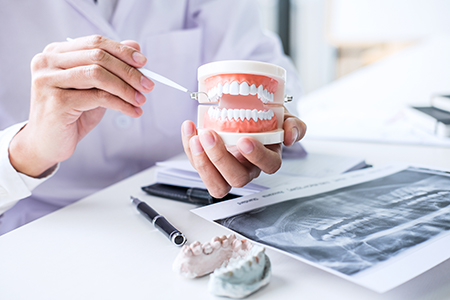
Effective denture care begins with a comprehensive assessment: medical and dental history, tissue inspection, and imaging when needed. This information helps determine whether pre-prosthetic treatments—such as extractions or minor tissue reshaping—are recommended to create an ideal foundation for the denture.
The fabrication process blends clinical skill with meticulous laboratory work. Accurate impressions, thoughtful tooth selection, and staged try-ins allow us to evaluate fit, occlusion, and aesthetics before finalizing the prosthesis. Attention to these steps reduces the need for extensive adjustments after delivery.
Communication is central to the process. We listen to patients’ functional goals and cosmetic preferences, then explain the rationale for recommended approaches so people understand what to expect at every stage. This collaborative method produces dentures that look natural and feel dependable in daily life.
For some patients, integrating implants into the treatment plan enhances retention and chewing efficiency. When appropriate, we coordinate implant placement with prosthetic design to deliver a stable, long-term solution that still allows for the convenience of a removable appliance when preferred.

Receiving a new denture is a transition that typically involves a short adaptation period. Talking and eating may feel different at first; most patients notice steady improvement as muscles and tissues learn to accommodate the appliance. Practicing speech and starting with soft foods are practical ways to speed that adjustment.
Minor soreness and increased saliva production are common initially. If an area rubs or becomes tender, wearing the denture until the adjustment appointment helps the clinician identify the exact spot to refine. Prompt follow-up ensures the fit becomes increasingly comfortable.
Proper daily care extends the life and hygiene of a denture. Rinsing and brushing the prosthesis after meals, soaking it overnight, and maintaining oral hygiene of any remaining teeth and gums help prevent staining, bad odors, and tissue irritation. Removing dentures at night gives tissues a restorative break and supports long-term tissue health.
Routine checkups are important even after successful delivery. These visits allow us to monitor fit, detect changes in tissue contours that may require a reline, and perform comprehensive oral exams to assess the health of remaining teeth and soft tissues. With attentive follow-up, dentures can remain a comfortable, effective part of daily life for many years.
If you have additional questions about dentures or would like to discuss which option is best for you, please contact our office for more information. Our team is ready to help you explore solutions that restore function and confidence.


Today, it’s easier than ever to replace missing teeth and achieve natural-looking, durable, and long-lasting results! Depending on a patient’s dental needs, lifestyle, expectations of care, and budget, choices can include conventional fixed bridgework, dental implants, or removable partial and complete dentures. At the office of Emerald Dentistry, we’ll discuss all your options in care and answer all your questions as you choose the solution that’s right for you.
With advances in dental materials and technology, today’s dentures are more comfortable and realistic-looking than ever before.
Whether you wear partial or complete dentures, it’s essential to see the dentist for routine care. Besides checking the fit and condition of your dentures and making any necessary adjustments, you’ll also receive a comprehensive exam to check on the health of any remaining teeth as well as the soft and hard tissues in and around the oral cavity.
A same-day denture offers an accelerated design and fabrication process that allows a patient to go from impression taking to denture insertion in a single day.
For patients who don’t want to wait after having teeth extracted, an immediate denture can be inserted the same day your teeth are removed. Sometime later you may need the denture relined to address any changes in its fit once the extraction sites have completely healed.
While no one wants to drop or break a partial or complete denture, accidents do happen. The good news is that in some cases, your partial or complete denture is reparable. It all depends on the extent of the damage. Don’t hesitate to contact our office if you’ve broken or damaged your denture. We’re happy to help.
The simple act of taking your partial denture in and out can cause certain types of metal clasps to loosen over time. When you come in for your checkup visit or contact our office for an adjustment, we’ll assess the fit of your partial and tighten the clasps for improved stability and comfort.
While rebuilding a complete smile is a worthwhile investment, our office is sensitive to the costs involved in dental care. We customize care and will discuss which treatment options address your needs, lifestyle, and budget. How much a new denture will cost depends on the type of the prosthesis, its design, and the materials used to fabricate the supportive base, teeth, and clasps or precision attachments. Dentures that include the placement of dental implants for added retention and stability typically involve additional costs.
If you have dental insurance, your coverage may include a new or replacement set of dentures. Our staff is happy to review your coverage with you to ensure you are maximizing your insurance benefits while minimizing any out of pocket expenses.
At the office of Emerald Dentistry, we provide an extensive range of dental services, including the latest and most effective methods to help patients with missing teeth rebuild complete and beautiful smiles. As skilled and experienced professionals, we recognize that every patient is different, and every smile is unique. We’re passionate about what we do and take great pride in providing personalized treatment plans while treating our patients as valued partners in care.
Dentures are removable prosthetic devices that replace missing teeth and the surrounding tissues. They consist of artificial teeth set into a base that fits over the gums and distributes biting forces so you can speak and chew more effectively. Well-designed dentures also support facial contours and help restore a natural appearance when teeth are absent.
The base is shaped to match the soft tissues it rests on so the appliance achieves stability through fit, muscle control, and, when applicable, attachments or implants. Modern denture teeth are available in a variety of shapes and shades to mimic natural enamel and help maintain proper lip and cheek posture. Because they are removable, dentures allow thorough cleaning of both the prosthesis and the mouth, which supports long-term oral hygiene.
Dentures are broadly categorized as complete (full) dentures for fully edentulous arches and partial dentures for patients who retain some natural teeth. Complete dentures replace all teeth on the upper or lower arch, while partials fill gaps and use clasps or precision attachments to anchor to adjacent teeth. Within these categories there are variations such as immediate dentures placed after extractions and overdentures that gain support from retained roots or attachments.
Implant-supported or implant-retained dentures are another option that uses dental implants to improve retention and chewing stability while still offering a removable appliance in many cases. Partial frameworks can be made from flexible resins, cast metal, or hybrid materials to balance comfort and durability. The choice of design and material is based on the patient’s anatomy, remaining teeth, and functional goals.
Daily cleaning is essential for denture hygiene and tissue health: rinse dentures after meals, brush the prosthesis gently with a soft brush and nonabrasive cleaner, and soak them overnight in an appropriate solution when recommended. Always remove dentures before sleeping to allow oral tissues to rest and to reduce the risk of irritation or infection. In addition to cleaning the denture, brush any remaining natural teeth, gums, tongue, and palate to maintain overall oral hygiene.
Handle dentures carefully to avoid dropping them and avoid using bleach or abrasive household cleaners that can damage the surface or color of the teeth. Regularly inspect the appliance for signs of wear or damage and bring concerns to your dentist for professional evaluation. At Emerald Dentistry we encourage routine checkups so the fit and condition of the denture and the health of oral tissues can be monitored and maintained.
New dentures typically require an adjustment period during which speaking and chewing may feel unfamiliar; most patients experience steady improvement as muscles and tissues adapt. Practicing speech by reading aloud and starting with soft, easily chewed foods helps rebuild confidence and coordination. Properly fitted dentures that account for tooth position and occlusion support clearer speech and more efficient chewing.
Implant-supported or well-fitted overdentures generally provide greater stability and can make eating a wider range of foods easier compared with conventional removable dentures. Even with the most stable prostheses, patients should take care with very sticky or hard items and cut food into manageable pieces while adapting. Regular follow-up visits allow clinicians to fine-tune the fit so function continues to improve over time.
Good candidates for dentures include people who are missing several or all teeth and want a removable solution that restores chewing function and facial support. Patients with healthy oral tissues, adequate bone contour for tissue support, or those who can tolerate routine dental visits and care are typically well suited for removable prostheses. Partial dentures are appropriate when remaining teeth are stable enough to support clasps or precision attachments and when conserving existing dentition is a priority.
Candidacy also involves a review of overall health and lifestyle factors; certain medical conditions or medications can affect healing and tissue health and should be discussed with your dentist. When underlying issues like periodontal disease or problematic teeth are present, those conditions are usually addressed before long-term prosthetic treatment is finalized. A comprehensive clinical exam and imaging help determine whether dentures or alternative approaches such as implant-retained solutions are most appropriate.
The process begins with a comprehensive assessment including dental and medical history, tissue evaluation, and diagnostic imaging as needed to plan a prosthesis that meets functional and aesthetic goals. Pre-prosthetic treatments such as extractions, minor tissue reshaping, or periodontal care may be recommended to prepare a stable foundation for the denture. Accurate impressions, bite records, and staged try-ins allow the team to evaluate fit, occlusion, and appearance before the final appliance is fabricated.
Once the final denture is delivered, clinicians schedule follow-up visits to adjust pressure points, refine occlusion, and ensure comfort during the adaptation period. If implant support is part of the plan, implant placement and integration are coordinated with the prosthetic timeline so the final denture provides the intended retention and function. Clear communication throughout every step helps patients understand what to expect and results in a prosthesis that performs dependably in daily life.
Yes, dentures can be combined with dental implants to create implant-supported or implant-retained solutions that significantly enhance stability and chewing efficiency. Small-diameter or standard implants are placed in the jaw and fitted with attachments that secure a removable overdenture or support a fixed prosthesis, depending on the design. This hybrid approach preserves many of the conveniences of removable dentures while reducing movement and improving confidence with function and speech.
Implant-retained dentures also help limit further bone resorption by transferring functional forces into the jaw in a more natural way than conventional tissue-supported dentures. The number and placement of implants depend on the arch, bone quality, and restorative goals, and your dentist will explain the options and expected outcomes. Maintenance involves routine care of both the implants and the prosthesis so long-term results remain stable.
Denture fit changes over time as the jawbone and soft tissues remodel, so regular clinical reviews are important to confirm ongoing comfort and function. Many patients benefit from follow-up visits within the first few weeks after delivery and then periodic checkups every six to twelve months so the dentist can assess fit and tissue health. Relines or rebasing procedures are sometimes recommended to adapt the denture base to changing ridge contours and restore proper support.
Replacement is considered when wear, material degradation, or substantial anatomical changes prevent predictable fit and function; timing varies widely among individuals. Prompt attention to sore spots, loose fit, or difficulty chewing helps prevent larger problems and ensures the denture continues to meet daily needs. Your clinician will provide a personalized schedule for evaluations based on your anatomy and prosthesis type.
The initial weeks typically involve adaptation as saliva flow may increase, minor soreness can occur, and speaking and chewing feel different from natural teeth. Most patients notice steady improvement as oral muscles develop a new pattern for stabilizing the prosthesis; practicing speech and beginning with soft foods accelerates that process. If an area becomes tender, wearing the denture until the adjustment appointment helps the dentist pinpoint and relieve pressure points during a follow-up visit.
It is also normal to experience changes in taste or a temporary feeling of bulkiness as the mouth accommodates the appliance, and these sensations usually diminish over time. Maintaining diligent denture and oral hygiene and attending scheduled appointments supports healing and reduces the likelihood of irritation or infection. Contact your dental team sooner rather than later if persistent pain, difficulty swallowing, or unusual symptoms arise so the situation can be evaluated.
Replacing missing teeth with dentures restores chewing function and facial support, which helps maintain a balanced appearance and prevents the soft-tissue collapse that can occur after tooth loss. However, conventional tissue-supported dentures do not stop the natural bone remodeling process entirely; over time, progressive resorption of the jaw may alter fit and facial contours. Strategies such as preserving select roots for an overdenture or using implant support can help reduce bone loss and maintain structural integrity.
Regular oral examinations while wearing dentures are essential to monitor tissue health, detect signs of disease, and make timely adjustments so the prosthesis continues to function properly. Keeping any remaining natural teeth healthy and addressing oral habits that increase stress on the denture also supports long-term outcomes. A coordinated plan that considers hygiene, follow-up care, and appropriate use of implants when indicated gives patients the best chance for durable oral health and an appealing facial profile.

Contact us today and discover a calmer, more confident dental experience in Yonkers.
If you are looking for a dental practice that values honesty, comfort, and high quality care, we invite you to experience Emerald Dentistry. From your first visit onward, you will notice a difference in how we listen, explain, and care for our patients.